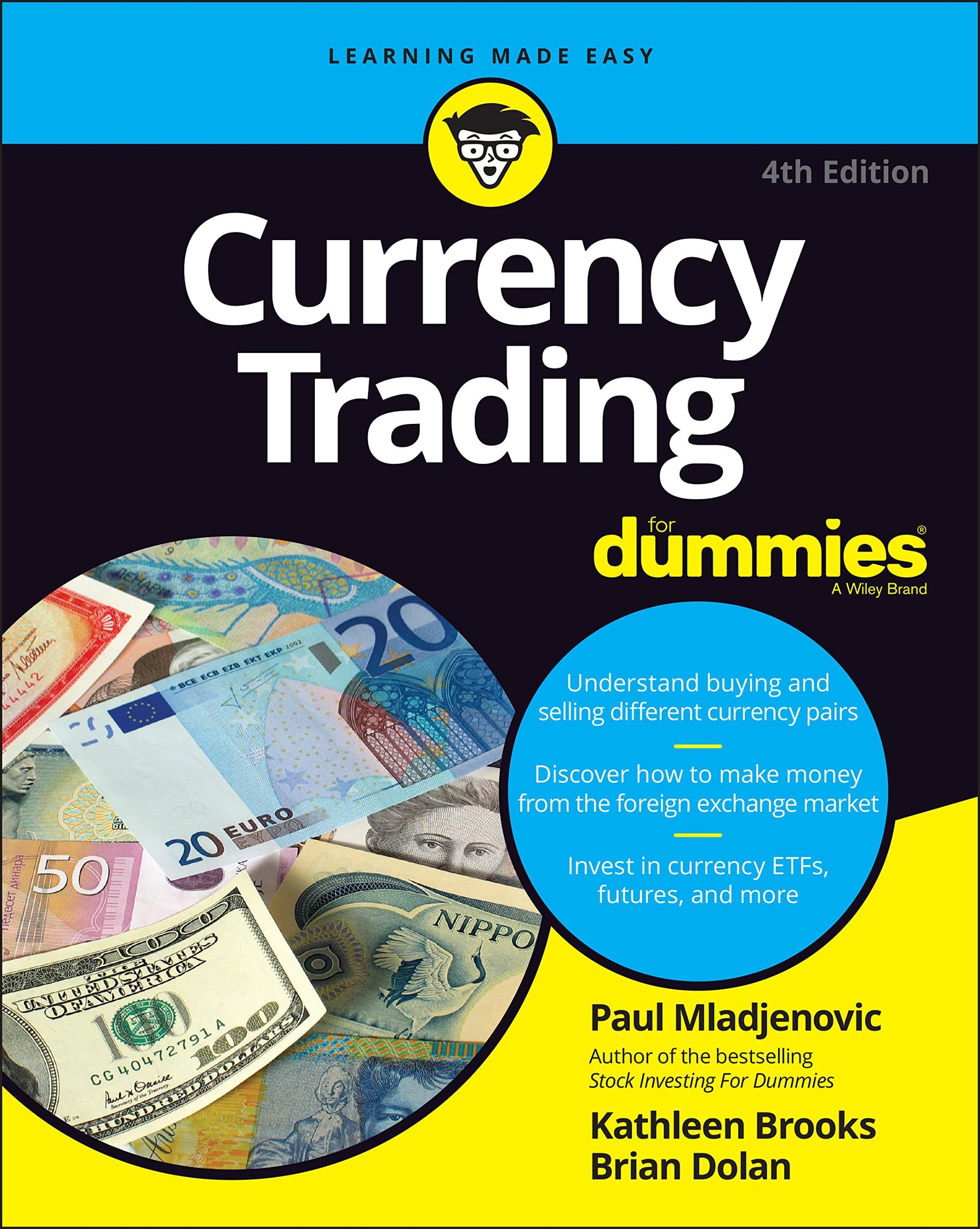
If you have ever heard people talk about forex trading and felt completely confused, you are not alone. Forex often sounds complicated, technical, and risky, especially for beginners. Terms like pips, leverage, spreads, and currency pairs can feel overwhelming at first. The good news is that forex trading is not as mysterious as it seems when explained in simple language.
This guide is written specifically for absolute beginners. You do not need a finance background, trading experience, or technical knowledge to understand it. The goal is to explain forex trading step by step, using clear examples and plain language, so you can understand what forex is, how it works, and what you should realistically expect.
This is not a “get rich quick” guide. Instead, it is a realistic introduction designed to help you build a strong foundation before risking any money.
What Is Forex?
Forex is short for foreign exchange. It refers to the global market where currencies are bought and sold. Every time you exchange one currency for another, you are participating in the forex market.
For example:
- When you exchange US dollars for euros while traveling
- When a company pays suppliers in another country
- When banks convert currencies for international transactions
Forex trading simply means speculating on whether one currency will rise or fall in value compared to another.
Why the Forex Market Is So Big
The forex market is the largest financial market in the world. Trillions of dollars are traded every single day. It is larger than the stock market, bond market, and crypto market combined.
There are a few reasons for this:
- Global trade requires currency exchange
- Banks and governments trade currencies constantly
- Investors and traders speculate on currency movements
Because of its size, the forex market is very liquid. This means you can usually buy or sell quickly without waiting for a buyer or seller.
How Forex Trading Actually Works
In forex, you always trade currency pairs, not individual currencies.
Examples of common currency pairs:
- EUR/USD (Euro vs US Dollar)
- GBP/USD (British Pound vs US Dollar)
- USD/JPY (US Dollar vs Japanese Yen)
When you trade a currency pair, you are:
- Buying one currency
- Selling the other currency at the same time
If you buy EUR/USD, you are buying euros and selling US dollars. If you sell EUR/USD, you are selling euros and buying US dollars.
You make money if the market moves in the direction you predicted.
Understanding Currency Pair Prices (Super Simple)
A forex price tells you how much of the second currency is needed to buy one unit of the first currency.
Example:
- EUR/USD = 1.1000
This means:
- 1 euro = 1.10 US dollars
If EUR/USD moves from 1.1000 to 1.1050, the euro has strengthened against the dollar.
What Is a Pip?
A pip is the smallest price movement in forex trading.
For most currency pairs:
- 1 pip = 0.0001
Example:
- EUR/USD moves from 1.1000 to 1.1001 = 1 pip
Pips are how traders measure profits and losses.
What Is Leverage? (Important for Beginners)
Leverage allows you to control a large trade with a small amount of money.
Example:
- With 1:100 leverage
- $100 can control $10,000
Leverage can increase profits, but it also increases losses.
This is where many beginners fail. They use too much leverage, trade too large, and lose money quickly.
For absolute beginners, low leverage is safer.
What Is a Broker?
A forex broker is a company that gives you access to the forex market. You trade through their platform.
A broker provides:
- Trading software
- Price quotes
- Order execution
Choosing a regulated broker is extremely important. A bad broker can cause more damage than bad trading decisions.
Types of Forex Traders
There is no single correct way to trade forex. Different people trade in different styles.
Common styles:
- Scalping: Very short trades (seconds to minutes)
- Day trading: Trades opened and closed in the same day
- Swing trading: Trades held for days or weeks
- Position trading: Long-term trades held for months
Beginners usually do better with swing trading because it is slower and less stressful.
Basic Forex Analysis (Beginner Level)
There are two main ways traders analyze the market:
Technical Analysis
This uses charts, price patterns, and indicators.
Examples:
- Support and resistance
- Trend lines
- Moving averages
Fundamental Analysis
This focuses on economic news and events.
Examples:
- Interest rates
- Inflation data
- Employment reports
Absolute beginners should start with basic technical analysis before diving into complex indicators.
Risk Management: The Most Important Part
Most beginners focus on strategies. Professionals focus on risk management.
Key rules:
- Never risk more than 1–2% per trade
- Always use stop-loss orders
- Avoid revenge trading
You can be wrong many times and still be profitable if you manage risk properly.
Common Beginner Mistakes
Many beginners lose money because of the same mistakes:
- Overtrading
- Using high leverage
- Trading without a plan
- Chasing losses
- Believing in guaranteed strategies
Forex trading rewards patience, not emotion.
Demo Accounts: Practice Without Risk
A demo account lets you trade with fake money in real market conditions.
Benefits:
- Learn the platform
- Test strategies
- Build confidence
Beginners should use a demo account for weeks or months before trading real money.
Is Forex Trading Gambling?
Forex trading becomes gambling when:
- You trade without a plan
- You risk money emotionally
- You rely on luck
Forex trading becomes a skill when:
- You manage risk
- You use logic
- You follow a system
The difference is discipline.
How Much Money Do You Need to Start?
You do not need a lot of money to start learning forex.
However:
- Small accounts grow slowly
- Risk management is harder with tiny balances
Start small. Focus on learning, not profits.
Realistic Expectations
Forex trading is not easy.
Most successful traders:
- Took years to become consistent
- Lost money while learning
- Treated trading as a skill
If someone promises fast, guaranteed profits, walk away.
Final Thoughts: Forex for Absolute Dummies
Forex trading is not magic, and it is not impossible. It is simply a skill that requires education, patience, and discipline.
As an absolute beginner, your goal should not be to make money immediately. Your goal should be to understand how the market works, protect your capital, and build good habits.
If you take forex seriously, learn step by step, and respect risk, forex trading can become a valuable financial skill over time.
Always remember: survival comes before profit.
Summary:
Forex (foreign exchange) refers to the foreign currency exchange market, the world�s largest financial trading market. Pass yourself as a forex expert with these buzz words:
�Bid � to buy
�Ask � to sell
�Liquidity � financial ease of transaction, i.e. cash
�Trading volume � the amount traded
�Bid/ask spread � the difference between the proposed buying price and the actual selling price
�OTC � over the counter
�Exchange rate � the difference between currency values; f…
Keywords:
forex, forex trading,online forex trading,forex online,forex trading system,online forex trading
Article Body:
Forex (foreign exchange) refers to the foreign currency exchange market, the world�s largest financial trading market. Pass yourself as a forex expert with these buzz words:
�Bid � to buy
�Ask � to sell
�Liquidity � financial ease of transaction, i.e. cash
�Trading volume � the amount traded
�Bid/ask spread � the difference between the proposed buying price and the actual selling price
�OTC � over the counter
�Exchange rate � the difference between currency values; for instance, a Canadian dollar is valued at .86 of a US dollar
�Hedge funds � large mutual funds companies that control vast amounts of money and are able to manipulate the value of a currency through speculation
�Central bank � the national bank of a nation, which usually exerts control over the value of that currency
Forex trading is the investment in the currency of one nation. Multinational Corporations doing business across national boundaries find value in keeping their cash reserves in a variety of countries, and holding their funds in a myriad of ways. For example, a UK corporation may hold a percentage of its working capital in UK pounds, but if it does quite a bit of business in USA it may also maintain a percentage of its money in dollars, in US banks. Individual investors over the decades have discovered that there is profit to be made in investment and speculation in the currency markets.
Take the case during the 70�s when the German DM swung rapidly in value. It was worth anywhere from 1.2 marks to the US dollar to 3.5 US marks to the dollar. When the mark was worth 2.5 it was beneficial to spend dollars buying marks, since the mark would buy more goods or services at that rate. As the mark bottomed out 1.7 to the dollar there was less incentive.
Surprisingly, the forex market itself is not unified. One can find many small forex markets specializing in trading various currencies. The most commonly traded currencies in forex speculation are the US dollar, the Australian dollar, the British pound sterling, the Japanese yen, and the European Euro. Currency values vary depending on the market in which an investor is speculating, so there is really no such thing as a single, unified dollar rate, but instead there are multiple dollar rates, which vary according to the market where the trade is occurring.
The major cities in which trades occur include New York, London, and Tokyo. It�s a 24 hour process. When Asian trading ends, European trading commences, and when European trading ends, then American trading opens. Naturally, when American trading ends, it is time for Asian trading to open house once more� and so on.
Currently, the most actively traded currency is the US dollar, involved in 90% of all trades. This is followed by the Euro involved in 36% of all trades, then by the yen in 20% and the pound in 17%.
Our fastest rising currency in trade is the Euro, however the US dollar is still the favored anchor point– and the currency watched so as to judge how others will react. Differences in value of currencies come from the current events. GDP growth, inflation dips, interest rate swings, budget and trade deficits, surpluses and other economic conditions all shift currency values. Investors, for this reason, follow the news very closely. There are 24 hour cable news channels and many web sites devoted to news that aid currency speculators.
The forex market is highly susceptible to rumors. In fact the central banks of countries frequently manipulated local currency value by sowing rumors about interest rate hikes and other economic propaganda that impacts the value of the domestic currency. When this news is false it is called a dirty float- and it dismays the market.



Tinggalkan Balasan